
Cambridge High School Auditorium
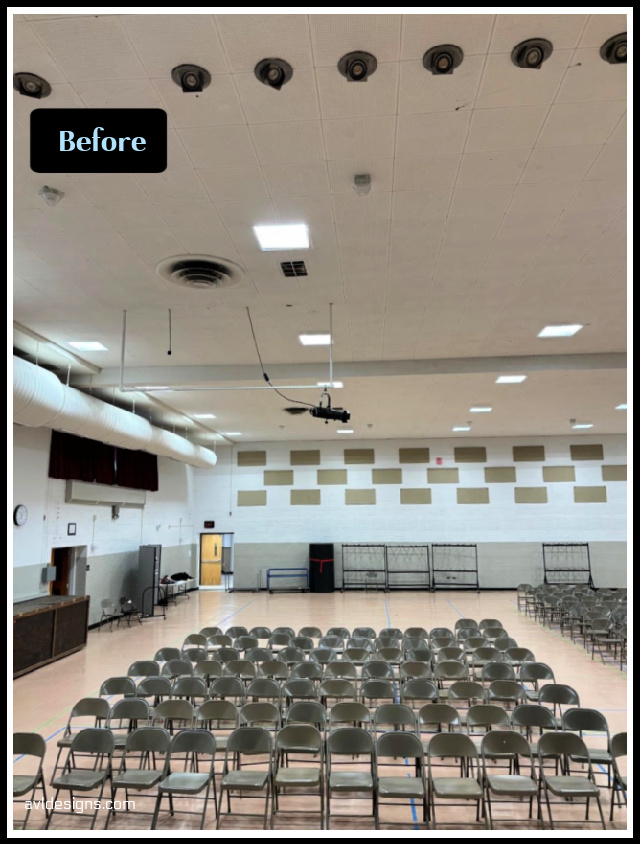
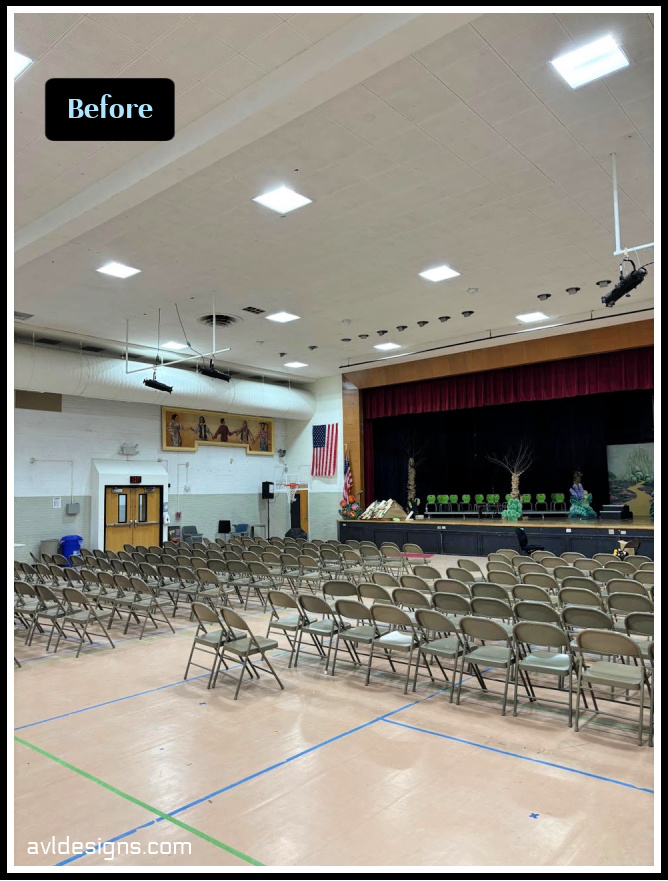
The Cambridge Central School District in Cambridge, New York, had a high school auditorium that was better described as a gym/cafeteria space with a stage.
It wasn’t a functional auditorium. The seating was portable, no acoustic treatments, no acoustic ceiling designs, very minimal stage curtains and not much stage lighting or audio.
They did, however, have a program that was turning out some excellent productions, which is amazing considering a total lack of inventory or capability in the space.
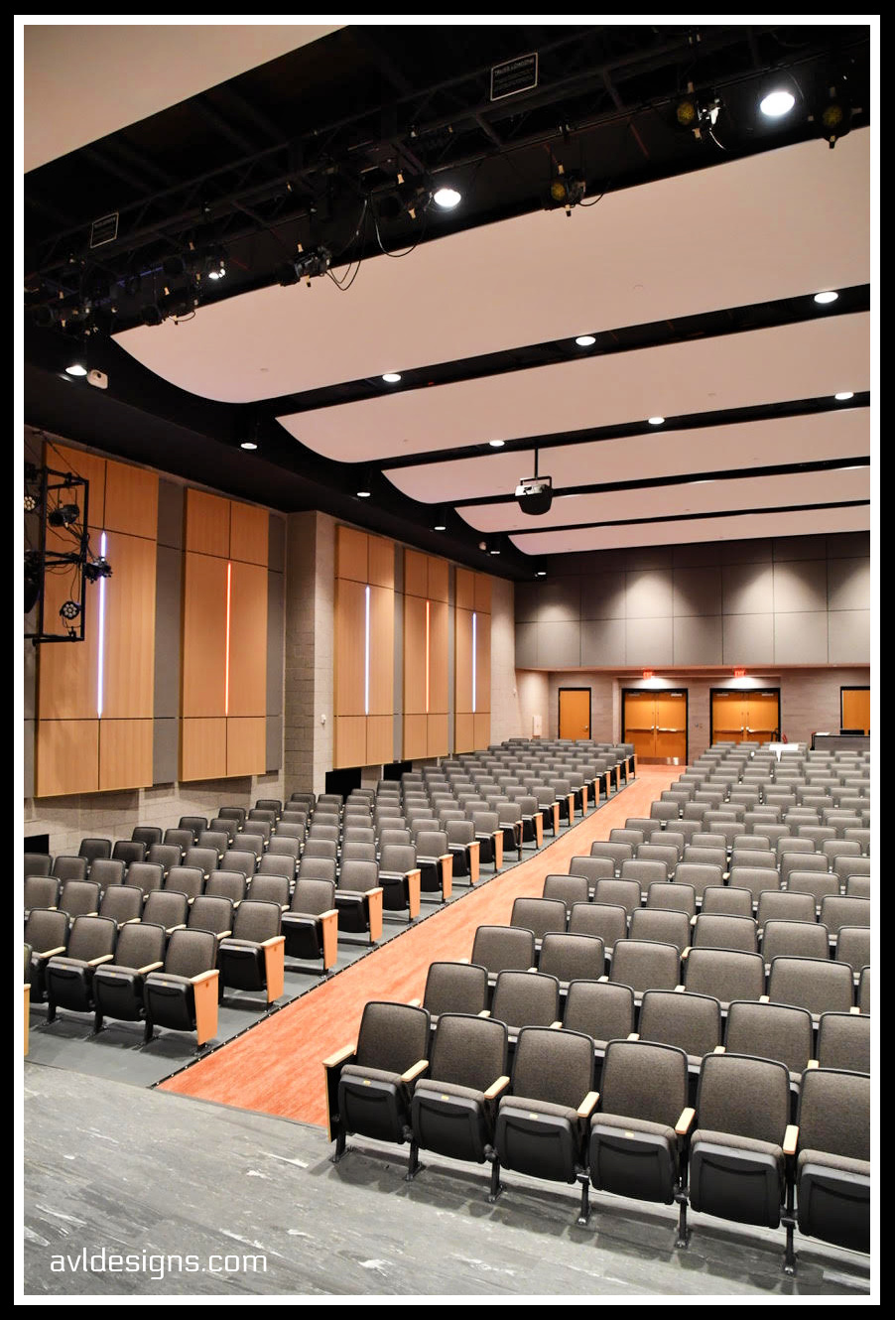
AVL Designs Inc. was contracted by Mosaic Associates Architects, to design a new auditorium within the existing footprint.
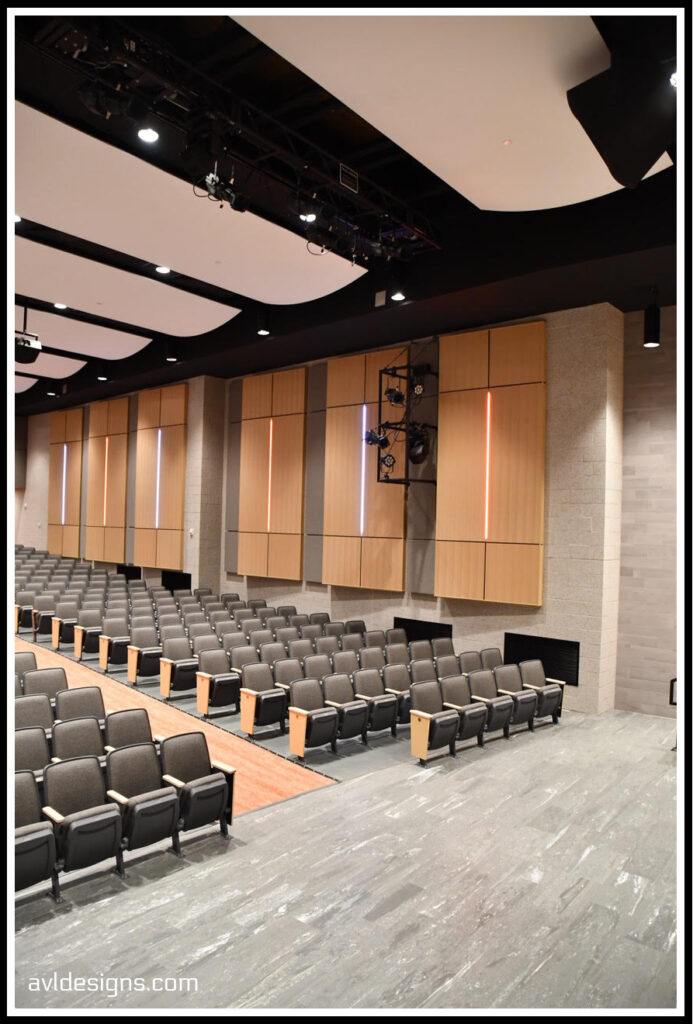
To achieve a balanced sound, AVL used a mix of acoustic ceiling clouds, angled side walls to redirect sound, specialized bass absorbers, and echo controls.
A completely new sound system was designed, as well as a cutting-edge theatrical lighting system. The sound design was based on Fulcrum Acoustics products using main and delay speakers in a configuration that covers the room with high quality FIR processed detail in the audio field.
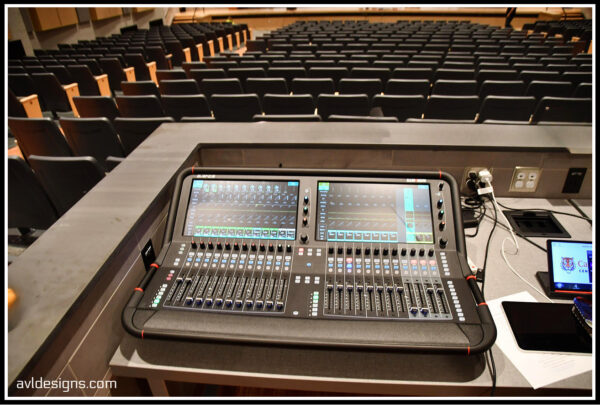
For a console AVL selected an Allen & Heath Avantis, which is an advanced console, extremely good for theater, that has a full package of DSP plugins built into the console.
The theatrical lighting system is based on Electronic Theater Controls. It’s a combination of ETC XE20-2K, as well as paradigm architectural controls and ETC theatrical lighting fixtures, including zooms, pars, Ellipsoidals, and other fixtures.
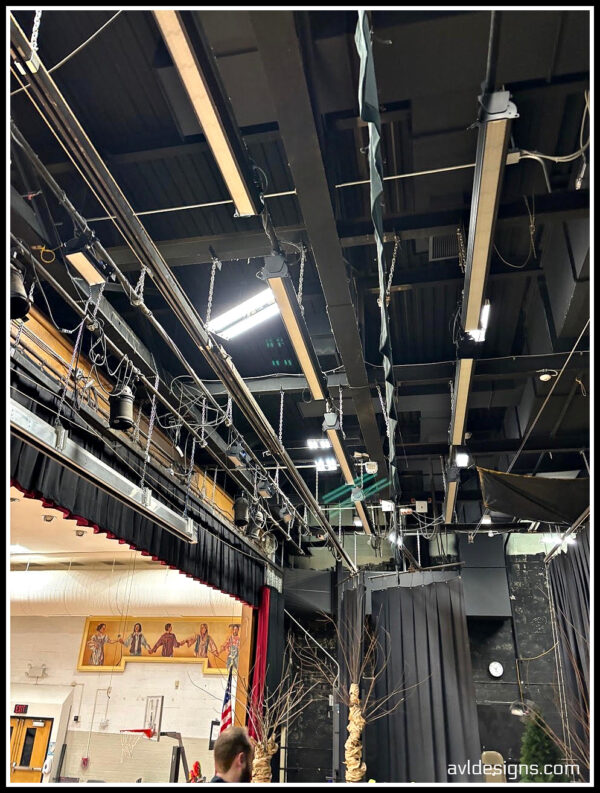
The package also included Chroma Series 2 strip lights on stage, as well as a number of other fixtures from both manufacturers. Scenery projection was included projecting on a roll drop using Panasonic projectors onto the roll drop.
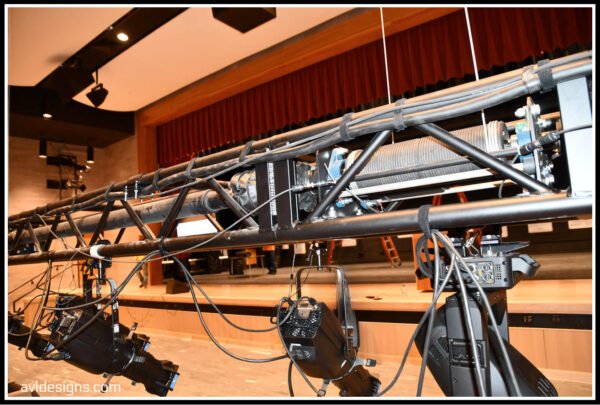
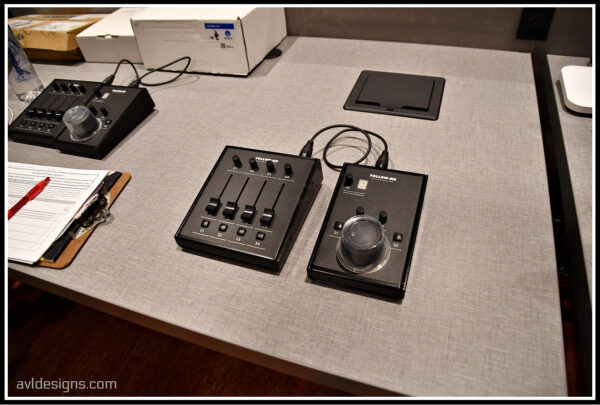
The front-of-house lighting position is a moving truss, which is good for static focus, but there was no way to run spotlights from up there. To solve the problem a follow-me spotlight controller was included with some ETC Lone Star moving heads. This allows a user in the control booth to see a point of view picture of the stage and control the moving heads as spotlights from the control booth.
The Control Booth is Unique
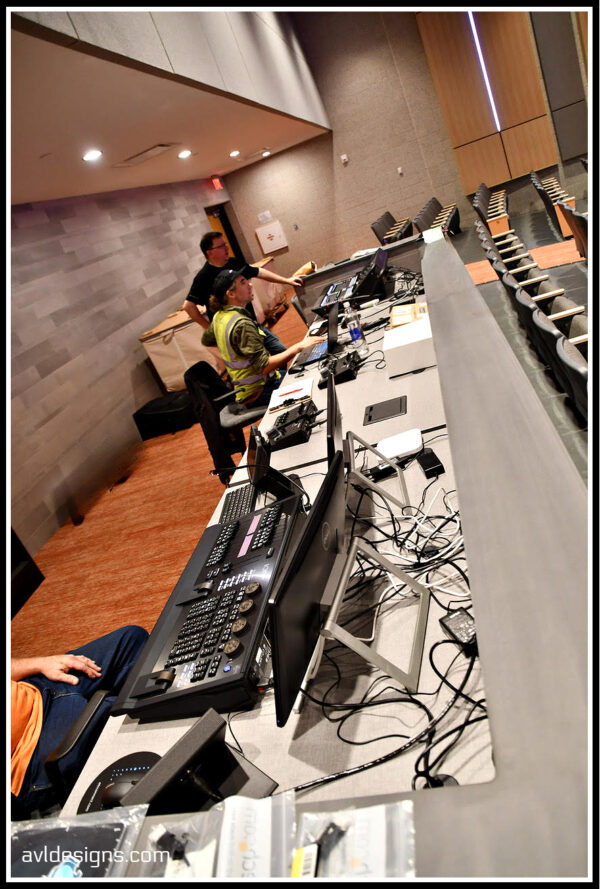
The school did not want to leave all the new equipment unattended when productions were not underway so AVL developed a series of rolling tables which are actually based on laboratory tables. These have built-in racks underneath and other features to make it extremely easy to take the entire lighting control, entire audio control, and entire spotlight control system and wheel them off into a closet!
The large booth that can be seen in the pictures is not permanent. It is set up on the three portable lab tables.
House lighting is a combination of LED built-in accent lights in the side walls, which were developed by Mosaic, as well as Meteor lighting down lights, which provide seating area lighting for the room. These are a high CRI high output fixture.
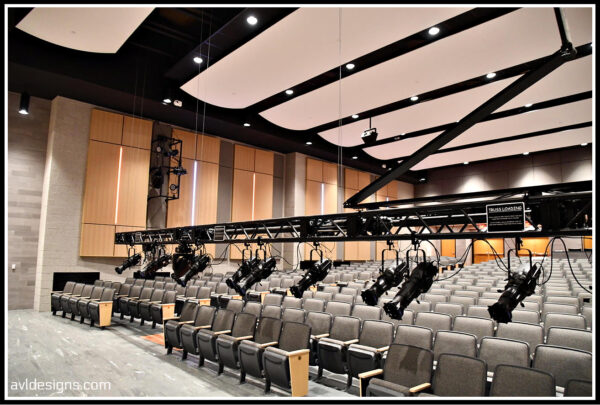
Stage rigging, which is counterweight, was added to the space. The prior system was entirely dead hung. Now they have the ability to raise and lower sets, raise and lower lighting positions to change out fixtures, move them around, as well as adjust the trim of their border curtains to mask lights for various kinds of shows.
The system recently went online. The owner is extremely pleased with the auditorium and how it has turned out.
It’s a dramatic transformation.
Noise Control
The other work provided by AVL Designs Inc. on this project was mechanical noise control, a complicated task due to where the units would be located.
The ductwork had to be run across the roof, which limits the types of silencers and linings that can be used.
When you are outdoors, you can’t use fiberglass linings or fiberglass-lined silencers. Using a combination of what are known as “packless silencers”, as well as laying the ductwork out to have multiple transitions, we were able to obtain noise below an RC-25 characteristic with no low-frequency hum, no noticeable mechanical noise to the system to speak of.
It’s slightly louder on stage when the projectors are on, which is to be expected. The scenery projectors do make a bit of noise, but even with them in use, it is still underneath an RC-30.
The entire system is RC-25 when those projectors are off. The room is now very, very silent, which will make for very good productions and a room that is very articulate.
END NOTES:
The team leads included AVL Designs Inc.’s Stan Jordan for stage rigging and theatrical lighting, Geoff Nichols for audiovisual, Seth Waltz as the project manager, acoustical design and noise control. The other partners were Mosaic Associates Architects for architectural design and Engineered Solutions, the mechanical engineers joined us on the noise control component.